Sunday, May 17, 2020

Sunday morning gospel, Part 1--Paul Mickelson Plays for Youth (Word W-3064; 1961)


One of the coolest covers of all time, and the Sharpie writing above the first two miniature teems (now invisible) was easy to clone out.  There was a price (1.00) and "B1."  Maybe the identity of a seller in a flea market mall.  Doc requested a post of this LP, and I'm glad he did, because it's a joy.  It's been played a lot, but the amazing VinylStudio click filter made it sound like new--with a little MAGIX splicing for the leftover noise.  Beautiful monaural fidelity, and the usual first-rate Word musicianship.  Besides an expert organist and pianist, Paul Mickelson was an executive at Word, and he formed the Supreme label, which got rave reviews at Billboard.  I'm getting all of this right now from Wikipedia....

Paul double-tracks piano in some spots, which I was relieved to find out from the notes, because I had no idea where the piano was coming from.  And the jacket credits are all in the family--Engineering and editing by William H. Mickelson, and the front cover photo by Jean Mickelson.  No luck on determining the exact relationships--Google-searching "Jean Mickelson" plus "Word Records" only yields this LP plus an unrelated entry.  Dunno who William was.  I'm a lot of help this morning, aren't I?

I love Mickelson's arrangements and clean, advanced technique.  He keeps things rolling but reverent, and I couldn't resist typing that phrase once it popped into my head.  Word Records could have used me back then.  "Rolling but reverent--that's great"--Word.  That, or "Get out of here."  The organ effects--percussion, celeste, and more--are superbly incorporated, with nothing corny or cliched, and the playlist is perfect.  According to the notes, "These songs are heart melodies of the young Christians of the twentieth century."  Come 1969 or so, it was "Jesus music."  Fast forward to 2020, and it's praise music (short phrases repeated 500 times, followed by a fade).  I'm sure the standard stereotype of religious music is a traditional, slowly changing core playlist, but that's not even true of mainline hymnals, which regularly add and discard numbers.  Still-popular old-time gospel numbers like When the Roll Is Called Up Yonder and He Lives represent a tiny, tiny fraction of all the numbers that have filled songbooks and tunebooks since the Ira Sankey period of the late 1800s.  A song's chances of becoming a sacred standard are roughly those of space junk hitting the hood of a car and leaving the profile of Clark Gable.

The final number on this outstanding LP--Stand up for Jesus--is one of the first gospel numbers I ever learned.  This was during my trial-by-fire period as organist for the first church I belonged to, when I didn't know one title from the other.  Luckily, piano lessons made me a good reader and, when necessary, a competent sight-reader.  In that gig, I often came to church on Sunday not having been given the hymn titles--so I did a lot of stuff cold.  But this is about Paul Mickelson--and Christian youth.  At 63, I wish I could get some of that back.  And I hope that, after the photo shoot, the young folks on the jacket were restored to their original size.  ("Oh, no!  The reducing ray won't go into reverse!!")

To the sounds....


DOWNLOAD: Paul Mickelson Plays for Youth (1961)


Lee


Thursday, May 14, 2020

Music Masters, and other fake-hit labels--A Neely Plumb and La Bastre Tenniman-athon


You are here in search of early Neely Plumb.  You may not even know who Neely was, yet you feel a need for early Neely.  Well, you came to the right place.  In the early 1950s, Neely was the bandleader (and possibly producer and music director) for the budget Music Masters and Ace-Hi labels, and he went on to a very successful career (and, I'm sure, a much higher salary) at RCA.  I'd link to his AllMusic bio, but the page is festooned with ads.  AllMusic reports that Neely worked with Jefferson Airplane, Esquivel, and Ann-Margret, and... arranged Sheb Wooley's Purple People Eater.  Now, that's the important credit!  The talented Neely died in 2000 at the age of 88.

Clearly, Plumb was gifted, so it's no surprise that the Music Masters selections are quite well done--and we'll be hearing seven of them.   78s and 45s on Music Masters and Ace-Hi tend to survive in chewed-up condition, so when I saw a mint-looking MM 78 on eBay, I knew I had to have it--especially since it contains one of my all-time pop favorites, Hold Me, Thrill Me, Kiss Me.  Kathryne Steele is the very fine vocalist on this track, and she gets to have her name spelled two different ways on the label--"Kathereyne" and "Kathryne"--and I could find no cyber-info at all on her (even using both spellings), outside of record-list data, though Discogs has this pic of her:


So we know she was talented and cute.  Just one of the many good postwar vocalists trapped on budget labels, and all because, post-big band, there were good vocalists hanging from the rafters.  Cool trivia about the original Coral label version of Hold Me... by Karen Chandler--its flip, One Dream (Tells Me), was penned by one "Jerry Stevens," an alias for Joseph Stefano, who wrote the amazing screenplay for Alfred Hitchcock's Psycho and who produced the famous first season of The Outer Limits.  Now you know.

See You Later Alligator is a blog repeat, but this file came out a lot better than before.  Its flip (on Value Hit Parade Tunes, part of the Broadway label group) is a cover of a cover.  Namely, a fake version of Pat Boone's hit version of Little Richard's Tutti Frutti.  Now, I cannot begin to explain why on earth LR (Richard Wayne Penniman) was composer-credited on this label as "La Bastre Tenniman"--I can just report that "bastre" is French for "with clothes."  This could refer to LR's flamboyant garb, but what the heck??  This version is pretty lively--moreso than Boone's.  And I like Boone, by the way, even if his rock and roll doesn't pass the authenticity test.

Drinkin' Wine... is making a repeat appearance, too, and I think this file improves on my previous effort.  Hard to say, as the 78 is pretty beat.  It's been stolen from my blog at least twice--I know my rip, because I've memorized the surface noise!  So we have the Texas Playboys (not Bob Wills') playing an uptempo country cover of an R&B hit, and, would you believe, the result sounds like an uptempo country cover of an R&B hit.  But... but... we have all these journalists telling us r&r came from the Grand Ole Opry, and this hardly sound like r&r.  Now I'm all confused.  Anyway, this side does jump along, though the steel guitar sounds like a badly sampled bagpipe, while the background singers are pretty terrible.  And it's amusing to hear a C&W voice intone, "Aw, give me some of that slop."  Maybe we should rethink this rock-came-from-country stuff.  But I love this side, and I found a page which talks about the Western Magic label and its owner, Jimmy Mercer of Paris, Texas.

Neely Plumb's Dragnet is a cover of Ray Anthony, and the recording is very unbalanced, with tinny highs and booming bass.  Oh, well.  You get what you don't pay for, I guess.  The same label's Oop-Shoop cover sounds better, and I don't know the history of this song--as in, who did the pop cover.  Prior to 1955-56, budget label fakes tended to copy the pop-hit versions of black numbers, so....  I'll need to do some serious Oop Shoop research, and I've always longed to type that.  Dunno if there's a hyphen or not.

The fake of Dim, Dim the Lights, a big hit for Bill Haley in its genuine form, is credited to Lee Evans and the Melodians on Music Masters, while the same track is credited to one Bob Le Mont on Gateway Top Tune.  The real singer, of course, is La Bastre Tenniman.  No, seriously, who knows?  The fake Heartbreak Hotel, performed by the well-known group, "Famous Western Stars with Full Orchestra," comes to us courtesy of Variety Records, and it could have been a lot better.  It's not the famous George Jones version issued under aliases on Starday and Tops, though it almost sounds like a copy thereof.  Discogs offers this info on Variety: "US label."  From the same 78, Be-Bop-a-Lula, which has less muffled fidelity and a slightly less bad singer, though he seems to think the song is called Be-Bob-a-Lula.  Fairly neat electric guitar break.

From the ultra-ultra-cheap Poplar Extended Play Records (Record-o-Mail), we have a killer version of Shake, Rattle and Roll, which out-rocks the Bill Haley cover (which I think this is a fake of), and a weird That's All Right, which is likely copying the Marty Robbins, not the Elvis, version.  Also, the fine Rock Around the House fake which was credited to Gabe Drake on Promenade and Fred Gibson on Tops, and a rocking House of Blue Lights (slang for a brothel, I believe) which sounds like the fake version issued by Rite Records.  Then, more Big 4 Hits (Rite Records), a couple Top Hit Tunes (Waldorf), and a Varisty (Eli Oberstein).  The Varsity is a blog repeat--1949's I've Got a Lovely Bunch of Cocoanuts--which I can only presume copies the Merv Griffin mega-hit, and Syncopated Clock on Royale (Elliot Everett is an alias for Oberstein), which is another repeat.  Both were ripped using my 3.0 mil stylus this time, instead of the 3.5.

The Reps' Reveille Rock comes from the only 78 rpm Hit Parader Records edition I've ever come across, and the Capital Distributing Company of Derby, Conn. also gave us Charlton Comics, in whose pages the Hit Parader and Song Hits fakes were offered by mail at a low, low price.  Which was the only price Capital Distribution could have hoped for.

Hopefully, I've caught all the typos.  If not, well... I'm only android.  I mean, human.  Enjoy!


DOWNLOAD--Music Masters, more


Why Don't You Believe Me (Douglas-Roddy-Laney)--Katheryne (sic) Steele, Neely Plumb's Orch. (Music Masters 2004)

Hold Me, Thrill Me, Kiss Me (Noble)--Kathryne Steele, Neely Plumb's Orch.
Lady of Spain (Reaves-Evans)--Bobby Doyle, Neely Plumb's Orch.  (Same)
Trying (Vaughan)--Mark McLean, Neely Plumb's Orch. w. The Lee Gordon Group (Same)
See You Later Alligator (Robert Guidry)--No artist credit (Value Hit Parade Tunes 120)
Tutti Frutti (La Bastre Tenniman)--Same
Drinkin' Wine Spo-De-O-De (McGhee)--Western Playboys, Vocal by Les Guthrie (Western Magic Hit Parade Tunes 1203)
Dragnet (Schumann)--Neely Plumb and His Orch. (Music Masters 2011)
Oop-Shoop--Peggy Lawrence w. Neely Plumb and His Orch. (Music Masters 2020)
Dim, Dim the Lights (I Want Some Atmosphere) (Ross-Dixon)--Lee Evans and the Melodians (Music Masters 2023)
Heartbreak Hotel--Famous Western Stars with Full Orchestra (Variety Records Country and Western Hits V-1802-6)
Be-Bop-A-Lula--Same, except V-1802-5
Shake, Rattle and Roll--Stars of Radio, TV, Stage and Screen (Popular Extended Play Records PO-2209)
Rock Around the Clock--No artist credit (Popular Extended Play Records PO-8)
The House of Blues Lights--Same
This Old House (Hamblen)--Tommy Loftin and His Mountain Boys (Broadway 281; 1954)
Reveille Rock--The Reps (Hit Parader Records BR-100)
Syncopated Clock (Anderson)--Elliot Everett and His Orch. (Royale 322)
That's All Right--No artist credit (Western Extended Play Records HB-8)
I Beg of You--Jimmy Lane (Top Hit Tunes TH-1801; Waldorf Record Corp.)
Waitin' in School--Same
Mr. Sandman--The Four Queens (Big 4 Hits 113; 1954)
Oop Shoop--The Four Jacks (Big 4 Hits 111; 1954)
I've Got a Lovely Bunch of Cocoanuts (Heatherton)--Jimmy Livingston and His Orch., v: "Skeets" Morris and Chorus (Varsity 233; 1949)


Lee


Sunday, May 10, 2020

Sunday evening shellac--Gabriel, Sankey, and "Church Scene," oh my!


I'm rushing to press, so I reckon I'll start with Charles H. Gabriel's 1900 Glory Song, which was one of the biggest-ever gospel hits--Gabriel reported that over twenty million (printed) copies were sold, which is very possible, given the every-home-had-one status of songbooks at the time.  I love the simple but perfect melody.  And the words--also by Gabriel--are worthy of Fanny Crosby.  This 1908 recording by the Criterion Quartet is a perfect rendition, in my humble opinion, and I think I coaxed some clear fidelity from it.  For a long time, this was one of those Songs That Everyone Knows.

I love the sample of Gabriel's original manuscript (above).  Awesome handwriting.  I scanned it from my copy of Gabriel's Gospel Songs and Their Writers (1915).

Our next selection will have to be "Church Scene" from the the once hugely popular 1886 play, The Old Homestead, by Denman Thompson.  Urban cliches of rural live did not originate with Phillips Lord, Ma and Pa Kettle, or Green Acres....


The singers/performers are the Hayden Quartet (same guys as the Haydn Quartet) from 116 years ago--1904.  (Had to clarify--I'm bad at head arithmetic, despite having had no problem with my college math requirements.  Strange.)  My copy is a single-sided 12" Victor, and the label looks 1920-ish, so this must have been in print for a good while.  No point in noting that the thing is quite dated, but our favorite pop culture is going to look and sound funny a century later, too, so....  All of the gospel songs featured in Church Scene were, of course, highly familiar to audiences of the time.  You'll hear a a couple painfully wrong organ chords on The Palms--maybe the Victor label figured no one would notice.

Then, our short playlist concludes with Parts 1-4 of Gospel Songs, sung by the Victor Mixed Chorus in 1916 (with Nos. 3 and 4 released in 1917).  Fabulous medleys, with the Billy Sunday material the most recent (at the time)--the Sankey-era hymns were oldies by 1916.  Interestingly, In the Sweet Bye and Bye (aka, By and By) predates Sankey's involvement with Dwight Moody by three years, and the Gospel Hymns songbook series by seven.  If only the condition was as good as the material and performances--someone had a rogue gramophone tonearm or a loose sound box, but the bad spots are over quickly enough.  Classic stuff, and I'll let the labels provide the playlists:


I have copies of all (?) six of the Ira Sankey Gospel Hymns songbooks (which began in 1875), including one shape-note edition and a possibly first edition of the first.  At any rate, here's the coolest of the covers, from 1876:


Many songs from the Sankey era are now mainline-hymnal standards, having risen in stature from "Sunday School" and "revival" numbers to, simply, hymns.  Which is great.

A short playlist, mainly because of the editing required, but....  Okay, a bad storm just hit, so I had to shut down the PC.  It was a short storm, though, so I'm back.  I won't get this done before evening, so this is now a Sunday evening shellac post.  As the saying goes, if you want to give God a good laugh, tell him your plans....

Enjoy!


DOWNLOAD: Sunday Evening Shellac, 5/10/20


From the July, 1910 New Victor Record Catalog:


Lee


Wednesday, May 06, 2020

Repost: An Hour of Lousy Sound Star Dust--Royale Concert Orchestra


The back jacket promises "full fidelity," which would normally be a good thing, but not when the label is Royale.

Royale, of course, was a member of the Record Corporation of America's stable of ultra-cheap labels, and An Hour of Star Dust is one of the least competently recorded and engineered fake-RCA releases of all--a horrifying charge, but true.  It also contains some of the funnest music anywhere in the company's catalog, so there's that.

By the way, I wrote "fake-RCA" to distinguish RCA from, for instance, RCA.

Did I say incompetently engineered?  Well, on top of the substandard (but full!) fidelity, we have the loud sound of a machine turning on and off between the tracks--a noise I graciously eliminated for you (am I a great guy or what?).  Where these recordings came from, I can't venture to guess--radio broadcasts, maybe?  I'm picturing a hand-held microphone, a tape recorder, and a radio.  That would explain the extremely low fidelity here.

Have I insulted the sound sufficiently?  Probably not.  But, as I noted, this is highly fun stuff, and it's one heck of a cheap-label relic. Note that Hollywood Concerto is actually a male chorus singing sea songs.  Possibly Royale had intended to include something by that name (Hollywood Concerto) but their clerk grabbed the wrong masters or something.  Not worth puzzling over.  It was just the RCA (not to be confused with RCA) way.

(This is a repost from three years ago.  Apologies for the lack of label scans--I didn't start those until recently.)


DOWNLOAD: An Hour of Star Dust

(See LP front for track listing.)


Lee


Sunday, May 03, 2020

Sunday morning gospel: The Singing Farmer--Bob Parrish (GMA Records, circa 1964)


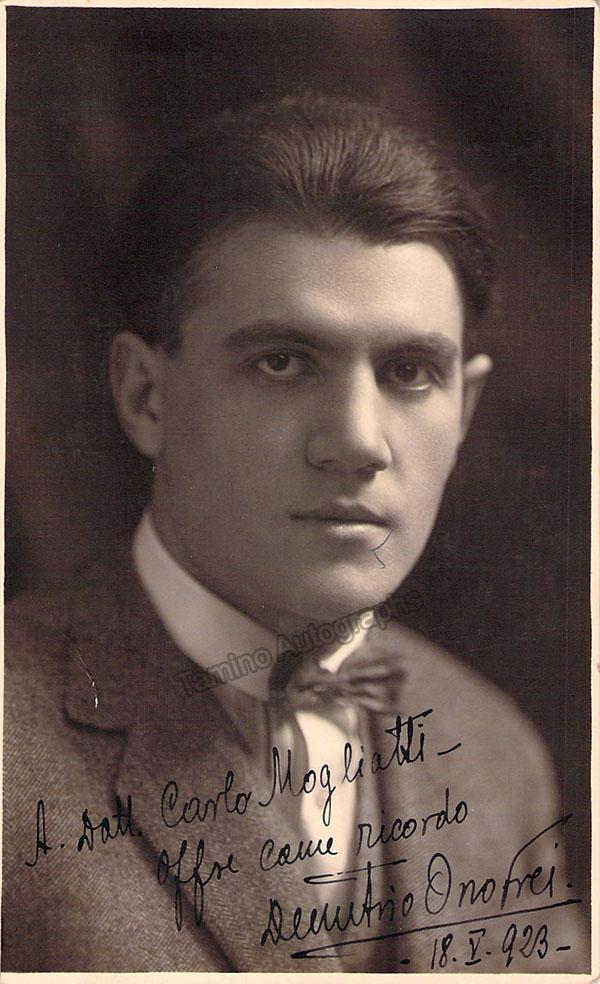
A thrift gift from Diane (thanks, Diane!), this LP features robust, loud, take-no-prisoners gospel singing of the Jerome Hines/George Beverly Shea type.  A fourteen-track revival in your living room!  This is Milford, Illinois' Bob Parrish, "The Singing Farmer," and of course "Singing Farmer" had me expecting something twangy or cowboy.  I certainly wasn't expecting concert-style vocalizing, but that's what we get, and I'm not complaining.  Turns out that Bob studied under the once-famous lyric tenor Dimitri Onofrei (misspelled as "Onofrie" in the liner notes):


... who was the husband of once-famous soprano Bianca Saroya.


This LP hails from circa 1964 (UPDATE: See comment of 5/27/22, which establishes the release year as 1967), which I was able to guesstimate from a sentence in the March 21, 1964 issue of Cash Box: "Bob Parrish--the singing farmer--paid us a visit last week and advised us that he recently waxed some material for upcoming release."  I'm thinking that today's offering was that upcoming release, since it's the only Parrish LP listed at Discogs--or anyplace else, it seems.   (UPDATE: Cash Box was referring to Bob's first LP, Old Favorite Hymns.)  Meanwhile, at eBay, three other singing farmers show up, in addition to Bob--"Ireland's Singing Farmer" John Wait; country artist Lake Howard of North Carolina (on a 1977 reissue of 1930s material); and someone named Marlan Peterson.  I guess no one quibbled over who owned the handle.

These are all sacred selections, of course, and the song listing had me liking the thing before I even laid the needle down--fourteen beautifully chosen gospel numbers, including some of my all-time favorites: One Day, Leave It There, Ivory Palaces, Rock of Ages (with the standard U.S. tune by Thomas Hastings), When the Roll Is Called Up Yonder, One Day, and the Fanny Crosby-Phoebe Knapp masterpiece, Blessed Assurance.  Crosby, the greatest popular hymnist of them all, is partially responsible for my addiction to what were once dubbed "Sunday School" or "revival" songs--she astonished me with her brilliantly straightforward lyrics, and I started to suspect that "the old songs" in gospel music were something to be taken seriously.  Assurance (parodied as "Blessed Insurance, Please pay on time.") may be her best text.  Remember, even though this distinction is rarely made anymore, that a hymn is a text--it can be joined to any tune that fits the syllable count.  That's why standard hymnals still have a metrical index, though most ministers no longer swap tunes and texts.

Anyway, back to Bob, whose career had a second wind in the 1990s, apparently thanks to an "On the Road" (Charles Kuralt) segment that featured him.  That career had been interrupted in the mid-1960s when his wife, at age 47, died from a cerebral hemorrhage.  He then devoted himself to running his farm while raising his two daughters.  He had been singing at Chicago's McCormick Place, the largest convention center in North America, the internet tells me.  And he had been invited to sing at Carnegie Hall.  It appears that never happened.

But we have this wonderful LP.  I suppose Parrish could be compared to Jim Nabors, in the sense of operatic singing coming from someone whose rural image belies the vocal reality.  And I have no idea what I just typed.  I found no obit on Parrish, so I hope he's still with us.  If so, he'd be around 95.  My thanks to him for making this gem and to Diane for finding it for me.


DOWNLOAD: The Singing Farmer--Bob Parrish


What a Friend We Have in Jesus (Scriven-Converse)

In My Heart There Rings a Melody (Elton M. Roth)
Are Ye Able (Marlatt-Mason)
Battle Hymn of the Republic (Howe-Steffe)
Leave It There (Tindley)
Ivory Palaces (Barraclough)
When They Ring the Golden Bells (De Marbelle)--Instrumental by Rev. Paul Clarke (or Clark)
In the Garden (Miles)
When the Roll Is Called Up Yonder (Black)
Rock of Ages (Toplady-Hastings)
Open My Eyes (Clara H. Scott)
Blessed Assurance (Crosby-Knapp)
One Day (Chapman-Marsh)
Will There Be Any Stars in My Crown--Instrumental by Rev. Paul Clarke (or Clark)


Bob Parrish, Baritone--"The Singing Famer"--accompanied on piano and organ by Rev. Paul Clarke (or Clark).  Produced by Ensminger (??).  (GMA Records SS-8438-018; circa 1964.)


Lee